Outlook Best Doctors South 2025
Bagi Heart Centre — Expertise. Technology. Compassion.
Cardiac Rhythm Care

Pacemaker Implantation

A minimally invasive procedure that places a small device under the skin to monitor the heartbeat and provide electrical impulses when the heart rate is too slow.

Overview

Understanding this service

The heart has a natural electrical system that starts and conducts each heartbeat. When the natural pacemaker or conduction system does not work properly, the heartbeat can become dangerously slow and may cause dizziness, fainting or other symptoms. An implanted pacemaker monitors the rhythm and stimulates the heart when needed.

The source page describes single-chamber, dual-chamber and biventricular pacemakers. Device selection depends on the rhythm problem, heart function and individual needs; features such as rate response and MRI compatibility may also be considered.

When is it recommended?

  • Sinus-node dysfunction causing an abnormally slow or irregular heartbeat
  • Acquired atrioventricular block or complete heart block
  • Symptoms such as fainting or dizziness shown to be related to a slow heart rhythm
  • Selected people with heart failure who may benefit from cardiac resynchronisation therapy
  • Temporary pacing in an emergency while a longer-term plan is established

Purpose and potential benefits

  • Supports an adequate heart rate when the heart's own electrical system is too slow
  • May reduce symptoms caused by bradycardia, such as dizziness or fainting
  • Monitors each heartbeat and delivers pacing only according to the programmed need
  • Offers single-, dual- and biventricular options for different rhythm and heart-function problems
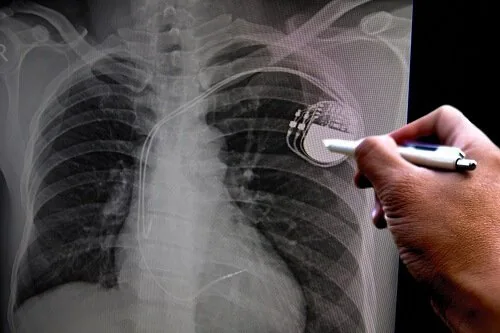
Pacemaker Implantation — cardiac care at Dr. Bagi Heart Centre
Pacemaker Implantation · Cardiac Rhythm Care
What happens

How the pathway works.

Your exact pathway depends on your clinical assessment.

01

Rhythm assessment

The cardiologist confirms the rhythm problem and reviews symptoms, ECG or monitoring results, heart function, medicines and relevant blood tests.

02

Preparation and local anaesthesia

The source describes fasting instructions, review of blood-thinning medicines, skin preparation and local anaesthesia below the collarbone. Medication changes should be made only on the treating team's instructions.

03

Lead and generator placement

Through a small incision, one or more leads are guided into the heart under X-ray. Their position and pacing measurements are checked, and the pacemaker generator is placed beneath the skin.

04

Programming and wound care

The system is tested and programmed before discharge. Patients receive instructions for wound care, medicines, arm movement, device checks and the pacemaker identification card.

Before & after

What patients can expect.

The source describes implantation as a local-anaesthetic procedure that commonly takes about one to two hours.

The incision must be kept clean and dry as directed while it heals.

A pacemaker card should be carried and shown during security screening and relevant medical care.

Strong magnets should not be placed over the device; the team will explain device-specific precautions.

Battery longevity varies by device and use, and regular checks determine when generator replacement is needed.

Cost information

The source states that pacemaker cost varies according to the type and features of the device; contact the centre for current, case-specific pricing.

Why Dr. Bagi Heart Centre

One specialist view across diagnosis, treatment and follow-up.

Dr. Bagi combines interventional experience with non-invasive evaluation and hospital-based care coordination. Recommendations are made after reviewing symptoms, examination findings and relevant reports.

Clear consultationOptions explained in language you can use.
Procedural experience7,000+ interventional procedures recorded by the source site.
Connected evaluationTesting and follow-up aligned with your treatment pathway.
Continuity of careSupport before, during and after a major decision.
Questions, answered

Pacemaker Implantation — frequently asked questions

General guidance only — your cardiologist will tailor advice to your health and reports.

A pacemaker continuously monitors the heartbeat and provides electrical impulses according to how it is programmed. It is designed to support the heart when the natural rate or conduction is inadequate.
The source describes single-chamber, dual-chamber and biventricular pacemakers. The cardiologist selects the system based on the rhythm diagnosis, heart function and the patient's needs.
No. The source describes a small incision below the collarbone, with leads guided through a vein under X-ray and the generator placed beneath the skin.
Yes. Device checks are needed to review battery status, leads and programming. The interval is set by the treating team and the particular device.
Book a Consultation

Your heart deserves expert care — let's talk today

Book a consultation with Dr. Vithal D. Bagi on WhatsApp, or reserve a slot online. For emergencies, call our 24×7 line.